
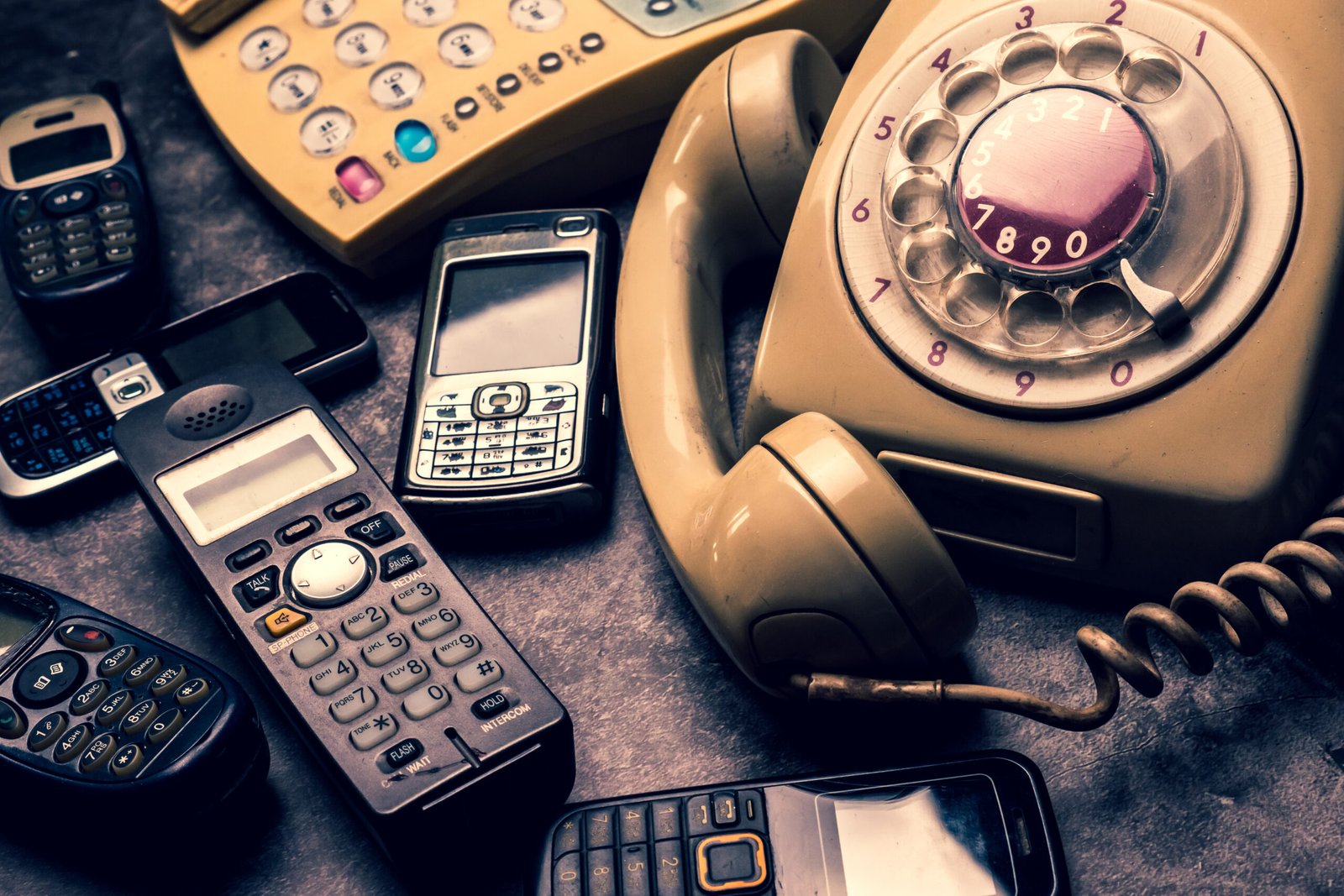
Reclaiming Focus in the Age of Distraction
Lets be honest. We’re glued to our phones. They’re the first thing we reach for in the morning and the last thing we put down at night. They’re in our hands, in our pockets, next to our beds. And chances are, you’re reading this on one right now. If you are, that’s okay. Checkmate.
Smartphones feign reinvention. Some fold now, piggybacking off the charm of old flip phones. But these new versions aren’t simple. They’re Frankenstein monsters built for heavy computing, for social media, and for keeping you plugged in, hypnotized, and addicted. Every new release is a mirage masquerading as progress.
Some phones unfold into mini tablets. Apparently one screen isn’t enough. Nobody really knows how many we need, but we keep buying them anyway. And at $2000 a pop, it’s an expensive way to scroll TikTok.
Good luck reading something meaningful on your phone without getting bombarded with text messages, pings, or random alerts. These shiny lures are designed to pull you away. It’s almost like they know when you’re focused and can’t stand it. They reel you back in like a fish on a hook.
Ping.
Notification.
Another notification.
As soon as your eyes wander to the alert, the hook is in your mouth, pulling you out of the sea of concentration. Each tiny tug, calling you back to the screen. Before you realize it, you’re lost in an app you didn’t mean to open, scrolling through things you don’t even care about and liking and sharing them for some unfathomable reason.
The Dumb Phone Revolution is fathomable though. It’s the choice between convenience and control. And I am not talking about the new smart flip phones that trap you in the same addictive ecosystem. I mean real flip phones. The ones people call dumbphones. But who wants to use something called dumb? Maybe that is why the tech-lords called these addictive devices “smart.” It sure sounds better. Marketing is king, after all.
We should change their names. So let’s just call dumb phones —wise phones. Because by the time you finish reading this, you might realize you don’t want to be smart, you’d much rather be wise.
Ask yourself: How often do you use your phone for something that truly benefits you, not just to fill the silence or avoid boredom?
If you weighed it out, is your smartphone serving you or are you serving it? Most people don’t even know who’s in control anymore. Their minds are fogged by constant dopamine and endless notifications. Time disappears, and they barely notice.
Almost half of Americans check their phones before even getting out of bed. And we wonder why anxiety and depression are everywhere, especially among kids.1
Even simple things have become complicated. It’s kind of embarrassing to admit but whilst deciding where to have dinner, I’ve caught myself perusing endless reviews, trying to make the perfect choice. It’s exhausting.
I’ve had to remind myself, looking at the menu could wait. Just because I could read it beforehand doesn’t mean I should. How’s that for not living in the present? Information overload is a real thing and it creeps into the most menial tasks.
And then there is that reflex we all have. You are talking with a friend, someone mentions Tom Cruise, and before you know it, you are deep in his Wikipedia page learning about his marriages and religion. Meanwhile, your friend is still talking. And yes, Tom’s still a scientologist.
Who cares? Really. Who cares?
Twenty minutes later, you have learned about Tom Cruise and nothing about your friend’s story.
That is what smartphones do. They pull us out of the moment. Out of connection. Out of real life.
We have lost the ability to make simple choices. Hungry? Just pick a place and go. If it’s bad, don’t go back. You don’t need to sift through fifty reviews or find a five-star rating to decide. Wannabe restaurant connoisseurs complain about everything, anyway. Who made their reviews gospel?
Live in the moment.
Of course, the biggest lure of all is social media. It is built to light up your brain like a Las Vegas slot machine. We keep pulling the lever, hoping for one more hit of pleasure. And just like gamblers, we lose more than we think. Our time, our focus, our peace. The house always wins.
Tech companies have human behavior down to a science. Every swipe, every notification, every like is designed to keep you hooked. Steve Jobs once said, “We made the buttons on the screen look so good you’ll want to lick them.” And we are licking them.2
We are more connected than ever, yet lonelier than we have ever been. Can you even remember life before smartphones? When we printed directions or asked a stranger for help? When we memorized phone numbers and called people to hear their voices? How about talking to strangers in waiting rooms?
Now we panic when our battery hits ten percent because we’re lost without GPS. We just follow the voice. Turn left. Turn right. U-turn. We arrive without ever really enjoying the journey.
We have traded awareness for convenience. Connection for comfort. Conversations for text bubbles and emojis.
Kids are screen dependent before they can read. Their creativity is waning. Their attention spans are shrinking. Their brains are being rewired, and not for the better. The scary part is we don’t know what to expect from them long term. Spoiler alert, it’s going to be ugly.
Former Google employee Tristan Harris once said that tech designers are in a race for our attention. And right now, they are winning.3
Social media companies use something called the Habit Loop. It is simple but powerful. A cue triggers a routine, and that routine delivers a reward. That is how habits form. This is the secret formula the tech-lords have used to enslave us to our phones.
We are not so different from lab mice. The cue goes off, we reach for the phone, and the reward hits. A like, a message, a new post, something new to look at. A piece of cheese.
If you have ever wondered why breaking a bad habit feels impossible, this is why. You have to repeat a new routine long enough for it to sink into your subconscious. Until then, you are relying on willpower, and willpower burns out fast.
Here is a simple example that actually works.
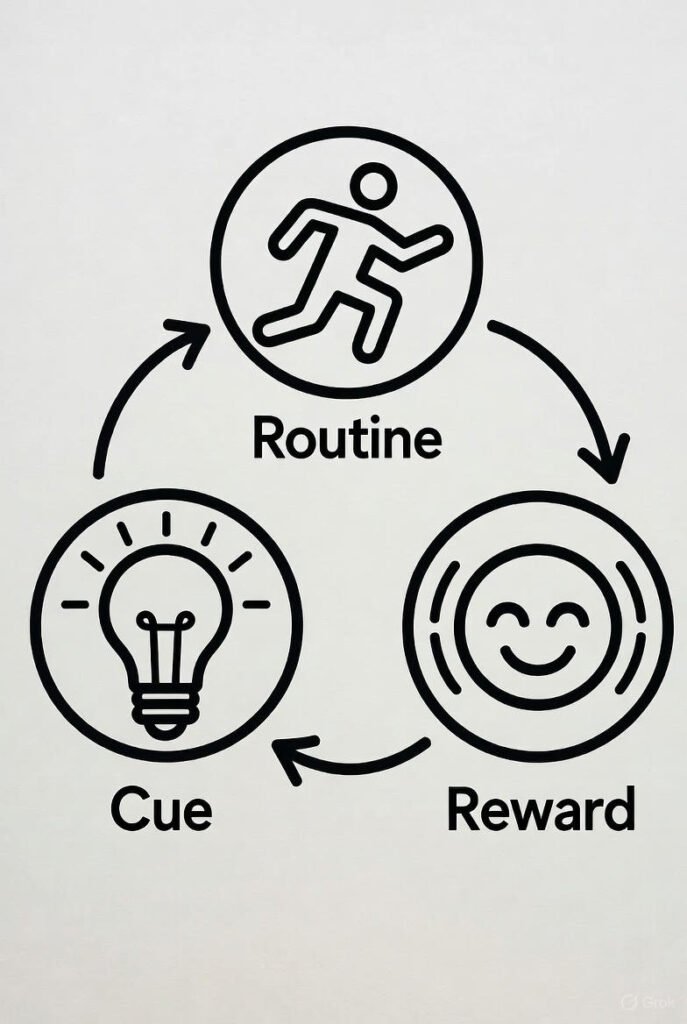
- Put your running shoes by the door before you go to bed.
- When you wake up and see them, that is your cue.
- Put them on and go outside, take a jog. That is your routine.
- Come home and make a protein shake. That is your reward.
At first it feels forced. But if you keep doing it, it becomes second nature. One day you will wake up and just go. No cue needed.
Now think about how your phone fits that same pattern. Every notification is a cue. The routine is checking your screen. The reward is whatever pops up. A text, a like, a post, something new to look at. A shiny fishing lure to bite on.
You are not their customer. You are their product. Your attention is what they sell. The problem is so vast and the addiction so real, that several companies are turning dumbphones into modern wise phones, by converting the addiction laced devices into focus centered machines, useful tools to carve your own path.
Wisephones are dumbphones but with more focused centered tools like GPS, Uber, Podcast, and options for long form media. These wise phones are engineered as a sea wall against the tsunami waves of digital distraction.
There is a problem.
We have to acknowledge it.
And we have to be proactive in taking our lives back.
And sure, smartphones and social media have some upsides. It helps you stay in touch and share memories. But ask yourself, how many of those people do you actually talk to anymore? How many of those connections are real? How much of that info do you really need to see immediately? Can checking something like that wait until you get home? Tom Cruise —He can wait.
So, do you really need a smartphone in your pocket every waking moment? I encourage you to look at flip phones from a new prism. If that’s too retro, try modern dumbphones–wise phones such as this device aptly named Wise Phone II, or Light Phone III, or Meadow, just to name a few.
It’s not just technology anymore. It is psychology. It’s fishing in a barrel.
Maybe it is time for a different kind of progress, not a faster phone, but a slower life.
Maybe it is time to trade the endless scroll for a walk, a real conversation, a meditative mind.
Maybe the revolution is not about new tech at all. Maybe it is about remembering what it felt like to live without needing to check something every five seconds.
When you hear that soft click of a flip phone closing, or that quiet sound of disconnection, maybe that is not regression. Maybe that is the sound of freedom.
Maybe, analog is Alpha.
Source:
Leave a Reply